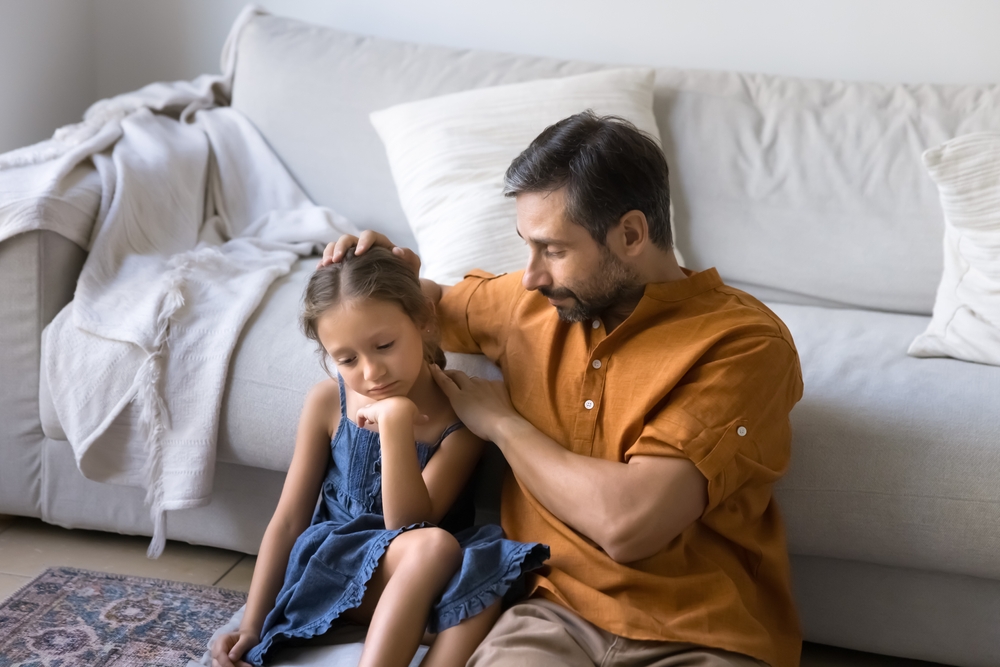
Children often understand more than adults expect, but they may misunderstand what they are not told.
After cancer treatment, a child may notice fatigue, scars, hair changes, appointments, quiet conversations, emotional tension, or limits on family activities. If no one explains what is happening, the child may fill in the blanks with fear, guilt, or confusion. A simple, honest conversation can give them a safer way to understand recovery.
For a father or caregiver, the goal is to help children feel informed, loved, and secure while giving them only as much detail as they can handle.
Children need plain language. They do not need every medical detail, but they do need words that make sense.
A young child might need to hear:
“Mom had cancer, and the doctors treated it. Her body is still healing, so she gets tired more easily. Cancer is not something you caused, and you cannot catch it.”
An older child or teenager may be ready for more detail:
“Treatment is finished, and the doctors will keep checking her with follow-up visits. Recovery can take time. Some days may be normal, and some days she may need more rest.”
The exact words will depend on the child’s age, personality, and what they have already seen. The message should be clear enough to reduce mystery without overwhelming them.
Children usually care most about what will change for them and for the person they love.
They may wonder whether Mom can come to their game, whether Dad will still make breakfast, whether the family trip is still happening, or whether they should be quieter at home. Adults may be thinking about scans and side effects, while children are trying to understand how the household will work tomorrow.
Explain practical changes directly:
“She may need to rest after lunch.”
“Grandma is going to help with rides this week.”
“We may keep evenings quieter for a while.”
“If plans change, we will tell you.”
This kind of information helps children feel less blindsided. It also gives them permission to keep being children.
Children can quietly blame themselves for things they did not cause.
They may wonder if cancer happened because they got angry, argued, disobeyed, prayed the wrong way, or caused stress in the home. Even older children may carry guilt without saying it out loud.
Tell them clearly:
“You did not cause this.”
“Nothing you said, thought, or did made this happen.”
“It is not your job to fix it.”
That reassurance may need to be repeated more than once. Children often process hard news in pieces, and a question that seemed answered last month may return later in a new form.
Routine helps children feel safer.
Cancer recovery can disrupt family life, but not every routine has to disappear. Meals, school, bedtime, church, chores, family prayers, game nights, and ordinary expectations can give children a sense that the household still has structure.
Some routines may need to be adjusted. A bedtime story may become shorter. A parent may watch a child’s activity from a chair instead of standing the whole time. A family outing may need a backup plan. These adjustments can still be comforting when children know what to expect.
A steady routine tells the child, “Life is different right now, but the adults are paying attention.”
Many children want to help. Giving them a small, appropriate role can reduce helplessness.
A young child might bring a blanket, draw a picture, help choose a movie, or sit quietly for a few minutes. An older child might help with a simple chore, walk the dog, carry groceries, or pray with the family.
The key is to keep the responsibility light and age-appropriate. A child should never feel responsible for the survivor’s health, mood, recovery, or medical care.
Helpful language sounds like:
“You can help by being kind and patient, but the doctors and adults are responsible for the medical care.”
This gives children a place in the family without placing a burden on their shoulders.
Children do not all respond the same way.
One child may ask direct questions. Another may act as if nothing is happening. A younger child may become clingy, have trouble sleeping, or regress in behavior. A teenager may withdraw, become irritable, search online, or avoid talking because they do not want to upset anyone.
These reactions may not appear during the first conversation. They may show up later, especially around follow-up visits, visible symptoms, family stress, or changes in routine.
Caregivers can watch for shifts in sleep, school performance, mood, appetite, behavior, friendships, or interest in normal activities. A short conversation with a teacher, pastor, counselor, pediatrician, or school social worker may help if the child seems stuck or unusually distressed.
Children often ask questions in simple, direct ways.
“Is the cancer gone?”
“Will it come back?”
“Is Mom going to die?”
“Can I catch it?”
“Why is Dad still tired?”
A truthful answer can be gentle without pretending to know more than you do.
You might say:
“The doctors treated the cancer, and they do not see signs of it right now. They will keep checking.”
“We hope it does not come back. If we ever learn something important, we will tell you.”
“You cannot catch cancer like a cold.”
“His body has been through a lot, and recovery takes time.”
If you do not know the answer, say so. Then tell the child what you will do next: “I don’t know, but we can ask the doctor,” or “I don’t know exactly, but I will tell you what I find out.”
Children need honesty, but they do not need every adult worry.
Be careful with late-night conversations, phone calls, scan results, financial stress, or emotional arguments within earshot. Children may hear fragments and imagine something worse than the truth.
If a child overhears something upsetting, address it rather than hoping they forget. Ask what they heard and what they think it means. Correct misunderstandings calmly.
This is especially important when adults are waiting for test results. A child may sense tension and assume something terrible is happening. A simple explanation can help:
“We are waiting for results, and waiting can make us nervous. We will tell you when we know more.”
In families of faith, children may understand recovery through prayer, church, Scripture, and trust in God. These can be strong sources of comfort.
Use faith language in a way that reassures rather than pressures. A child should not feel that the survivor’s recovery depends on whether they pray enough or believe strongly enough.
Helpful faith-based language might be:
“We are praying and trusting God one day at a time.”
“God cares about our fear, and we can talk to Him honestly.”
“Our church family is helping us because families need support.”
Faith can give children a place to bring fear, sadness, and questions. It should not become another reason for them to feel responsible.
One conversation is rarely enough.
Children may return with new questions as they grow, as recovery changes, or as they understand more. A calm, open posture helps them know they can come back without upsetting the adults.
Try simple check-ins:
“What have you been wondering about lately?”
“Has anything about Mom’s recovery been confusing?”
“Do you want to talk, or would you rather just sit together for a while?”
Some children talk best in the car, at bedtime, while drawing, during a walk, or while doing something with their hands. The setting may matter more than the perfect words.
Some children need extra help processing cancer in the family.
Consider asking a counselor, pastor, pediatrician, school counselor, or social worker for support if a child has ongoing sleep problems, frequent stomachaches or headaches, intense fear, repeated behavior changes, anger that feels out of proportion, withdrawal from friends, school problems, or persistent sadness.
Getting help for a child is a wise step. It gives them another safe adult and gives the family more tools.
Children do not need adults to explain cancer recovery perfectly. They need adults who tell the truth in plain language, keep routines as steady as possible, invite questions, correct guilt, and make room for normal childhood.
A caregiver can help by staying calm, preparing simple explanations, protecting the survivor’s dignity, and making sure children are not left alone with their fears.
When children understand what is happening at a level they can handle, the household becomes less confusing. They can love the survivor, receive support themselves, and keep growing within a family that is facing recovery together.
